Aisle 23No. 395 of 460
Splashery
Neuron Specimen
65,535 small parts. Assembled in your browser.
Empty. Now look down.
Swipe across the pack to tear it open.
Press and hold. It pulls itself together.
Let go to drop it.
It stays in its pack here. The Playground has the rest.
Tiny World · Built from a recipe
Neuron Specimen
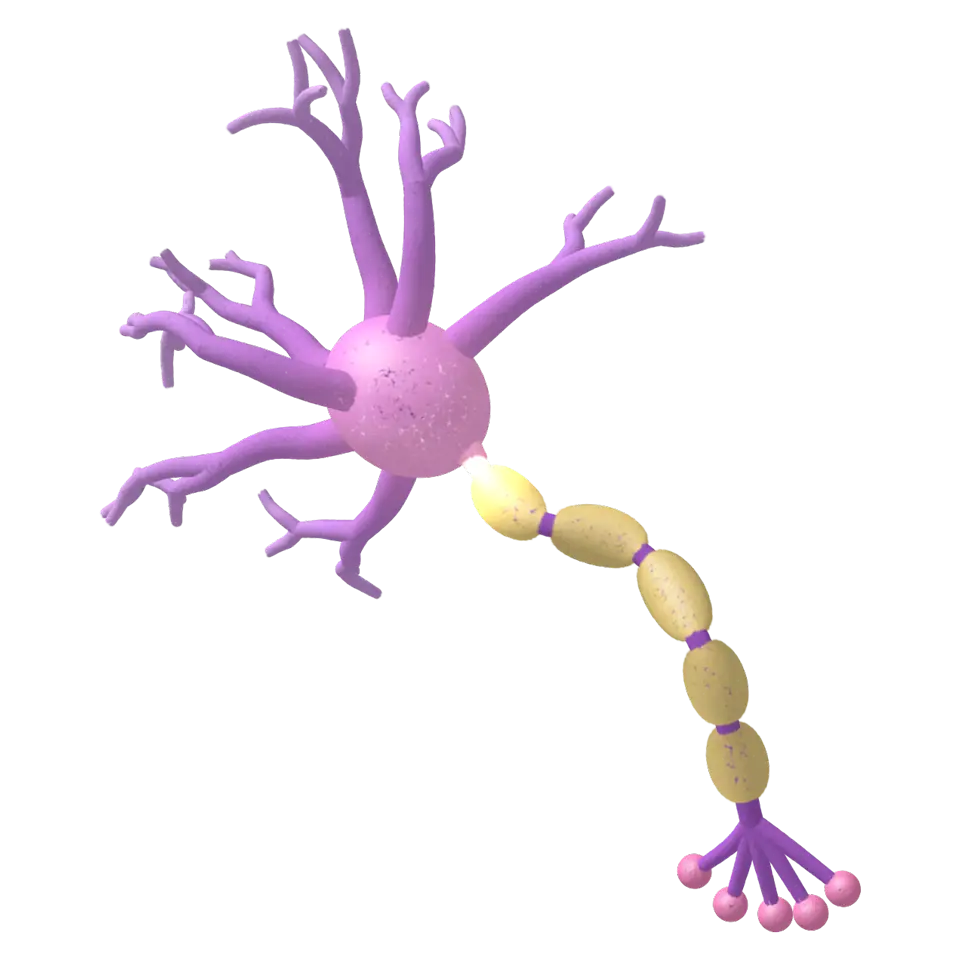
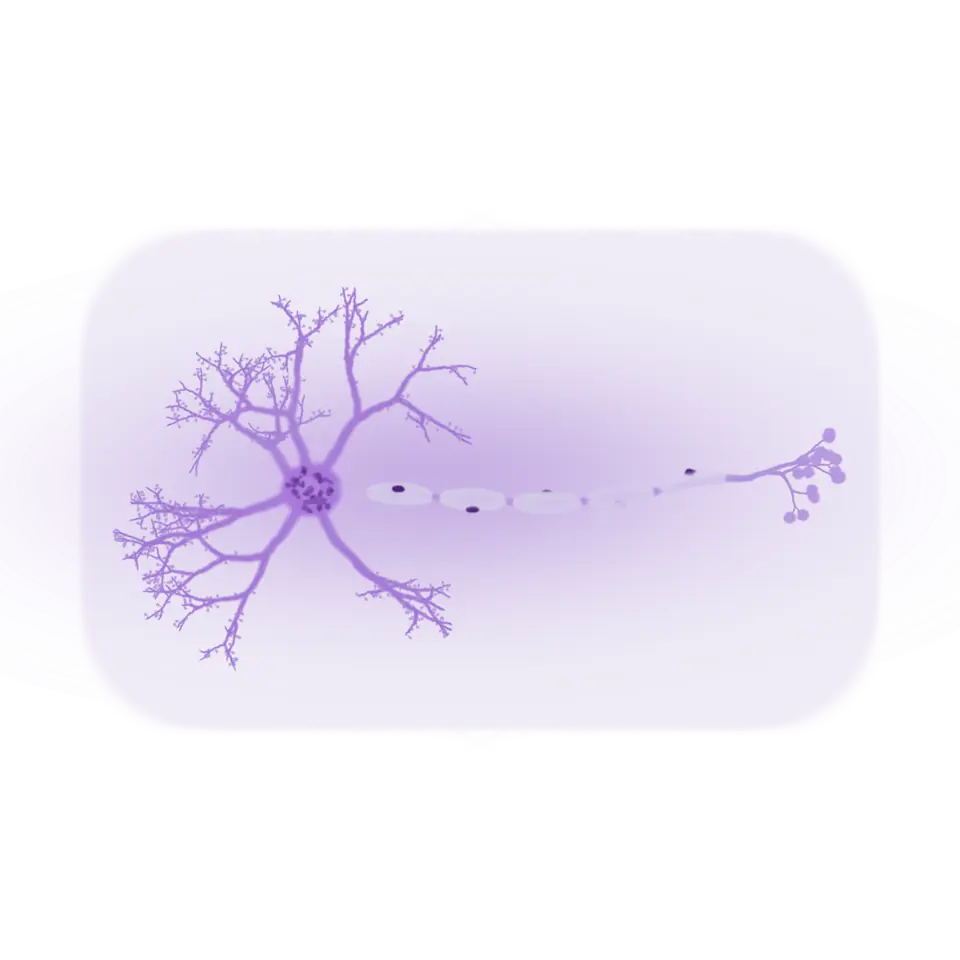
A textbook nerve cell on a lit microscope slide: dendrites, a cell body with its nucleus and Nissl bodies, a myelinated axon, and terminals.
Play with it in the Playground
How to play
Tap the cell to stimulate it there. In Splash, change the stain or turn Focus.
Toy facts
- Item
- No. 395 of 460
- Shelf
- Aisle 23, Tiny World
- Kind
- Built from a recipe
- Small parts
- 65,535
- Sound
- Yes
- Batteries
- None
- Assembly
- It does that itself
- Licenses
- CC0, MIT
- Price
- $0.00
Small parts are the splats in its usual build on a computer. A phone may draw fewer.
Its controls
| Control | Kind | Range | Start |
|---|---|---|---|
| Fire a spike | Tap | ||
| Focus | Slider | 0 to 100% | 100% |
| Fire a spike | Button | ||
| Stain | List | 3 choices | Nissl · cresyl violet |
About it
From a concept by Ryan Kamp. A textbook nerve cell on a lit microscope slide: dendrites, a cell body with its nucleus and Nissl bodies, a myelinated axon, and terminals. At full Focus, most screens draw 32,768 splats, low-memory phones 8,192.
A tap is a stimulating electrode: the signal spreads through the dendrites to the cell body, which fires a spike down the axon, node to node. The waveform is the Hodgkin-Huxley squid axon model, slowed; this is a schematic, not a measured neuron. Nissl dyes the Nissl bodies and leaves the axon pale, Golgi turns the neuron black on amber, and H&E shows pink cytoplasm and blue-purple nuclei. Lower Focus: pairs of splats merge into one, keeping mass, center, and covariance, while the slide stays lit. Made by Ryan Kamp, CC0; code MIT.
Sources and credits
| Work | By | License |
|---|---|---|
| From a concept by Ryan Kamp. Procedural specimen made by Ryan Kamp; CC0. Code: MIT. | CC0, MIT | |
| Hodgkin-Huxley model (1952): squid giant axon; slowed for viewing. Stain colors follow textbook histology. The model is published science, not a licensed asset; the splash's simulation of it is Ryan Kamp's own procedural work. | CC0 1.0 |